Create & Gift
How to Create a Family Cookbook for Christmas
Some of the most meaningful gifts aren't bought off a shelf. They're made from the things a family already shares.
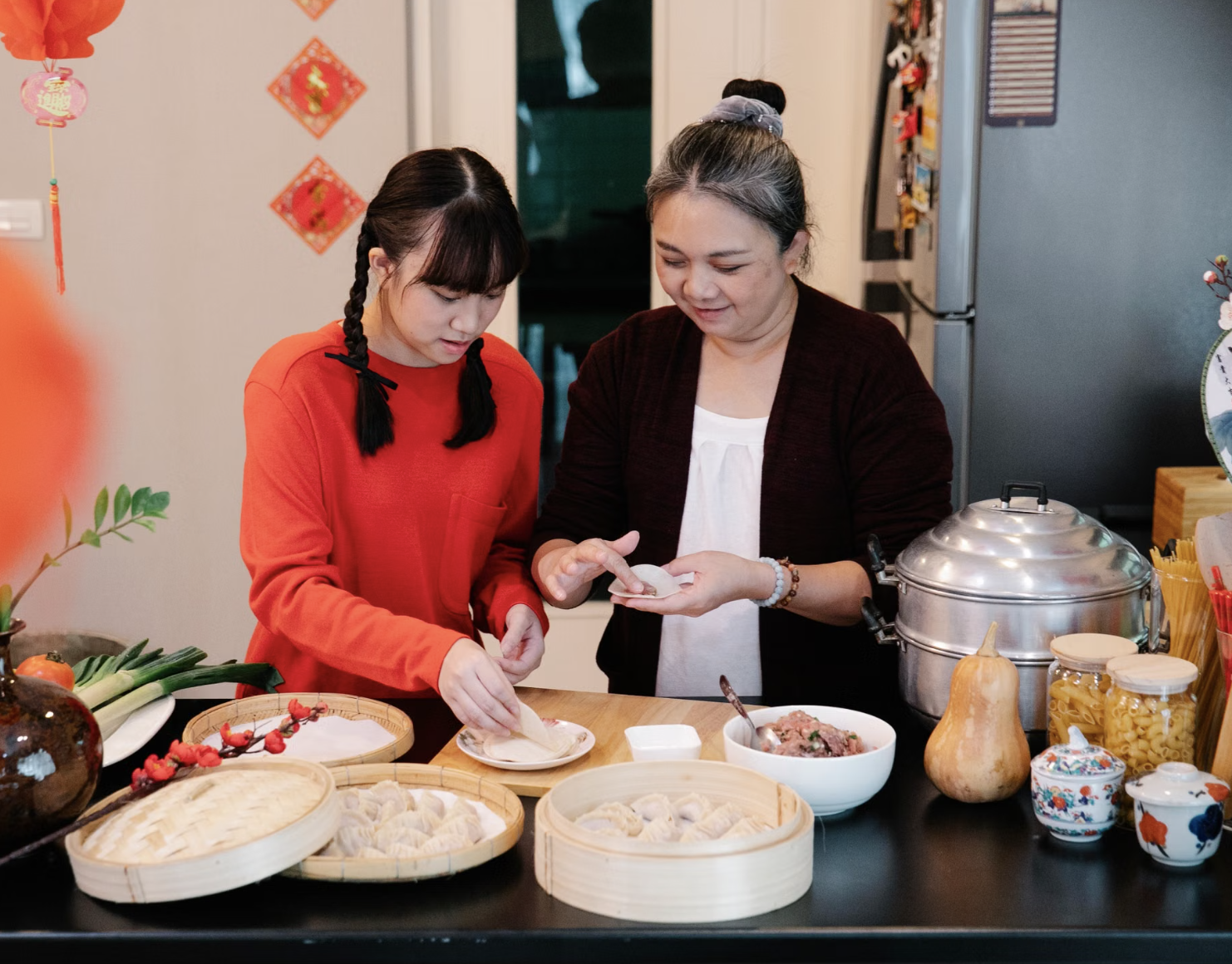
A family cookbook brings together the dishes everyone remembers, the people who make them, and the stories that might otherwise go untold.
If you're thinking of creating one for Christmas, you don't need to start with hundreds of recipes. You can begin with just one.
Step 1: Decide who the cookbook is for
Start by thinking about the person who will receive it.
Are you making a cookbook for your mother, who has hosted family dinners for decades? Your grandparents, whose recipes everyone asks for? Or your siblings, so that everyone has access to the dishes you grew up eating?
Having someone in mind helps you decide which recipes and memories to include.
Step 2: Make a list of meaningful family recipes
Think beyond formal recipes.
Consider the Sunday dish everyone gathers for, the holiday dessert one relative always makes, or the meal someone prepares whenever family visits.
Write down the dish, who makes it, and why it matters.
Your first list might have ten recipes or only five. That's enough to begin.
Step 3: Invite your family to contribute
A family cookbook becomes more meaningful when people contribute their own memories.
Reach out to parents, grandparents, siblings, aunts, uncles, cousins, and other loved ones.
Keep your invitation simple:
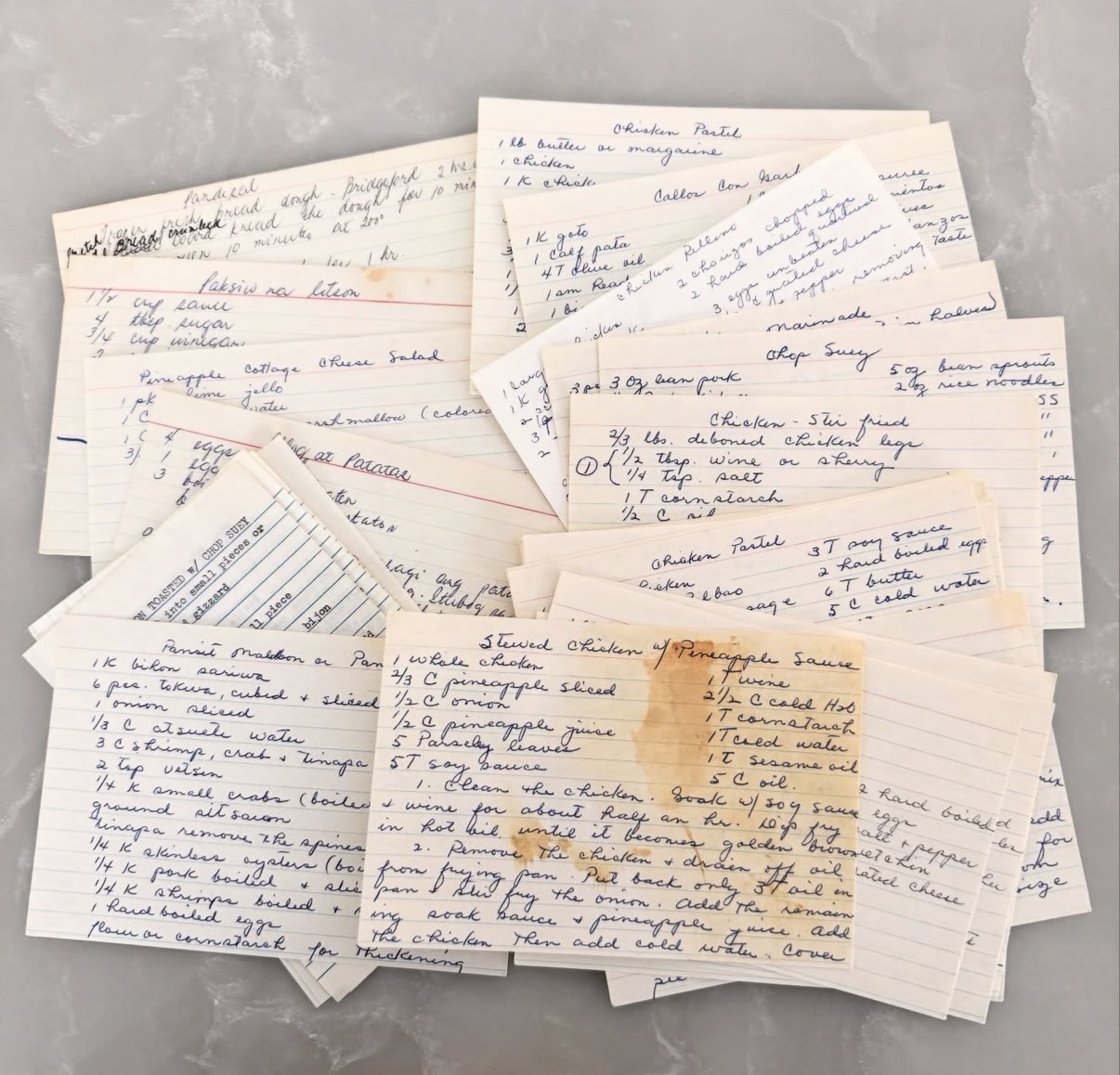
"I'm putting together a family cookbook for Christmas. Would you share one or two recipes that mean something to you? A photo of a handwritten recipe or even a voice recording is perfect."
Make it easy for people to participate in whatever way feels comfortable.
Step 4: Collect more than ingredients
Ask contributors to share a photograph, a cooking tip, or a memory attached to the dish.
You might ask:
- Who taught you to make this?
- When did you first remember eating it?
- What do you do differently from the written recipe?
- Is there a family story connected to this dish?
Sometimes those details are what make a recipe irreplaceable.
Step 5: Organize the cookbook
You can organize recipes by meal, occasion, family member, or tradition.
Possible chapters include:
- Sunday at Home
- Holiday Traditions
- Grandparents' Recipes
- Family Celebrations
- Everyday Favourites
Choose a structure that feels natural to your family.
Step 6: Decide how to share the finished collection
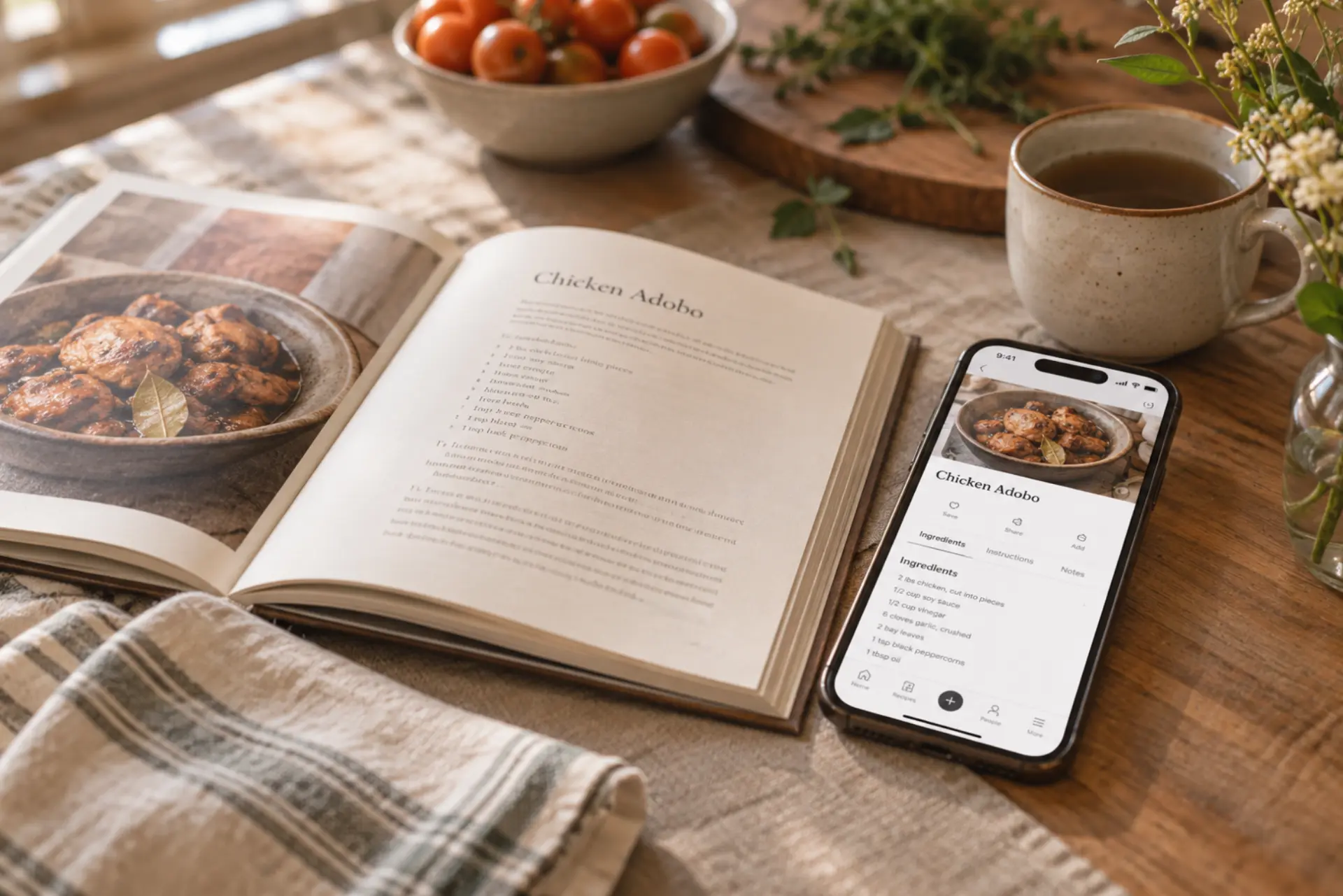
A family cookbook can be digital, printed, or both.
A digital version makes it easier for relatives in different places to access the collection and continue contributing.
If you plan to create a printed book, allow extra time for formatting, proofreading, and printing.
Check recipe instructions and measurements before distributing the cookbook, particularly when recipes have been transcribed from handwriting or recordings.
Step 7: Make room for new memories
A family cookbook doesn't have to be finished on Christmas morning.
New recipes will emerge. Younger generations will learn to cook. Family traditions will evolve.
The most meaningful collection may be one that everyone can continue adding to.
A Simple Four-Week Plan
- Week 1: Choose your recipients and list meaningful family recipes.
- Week 2: Invite loved ones to contribute recipes, photographs, and memories.
- Week 3: Organize the collection and confirm unclear cooking instructions.
- Week 4: Review the cookbook and prepare your digital gift or arrange printing separately.
If you're planning to print copies, check your printer's production and delivery deadlines well before Christmas.
How Heritage Table can help
Heritage Table helps families create a shared Living Cookbook by bringing recipes, photographs, voice recordings, and stories together in one private space.
Invite loved ones to contribute to a meaningful collection that can continue growing long after the holiday.